Blog
Four jars, three verdicts
August 28, 2026
Open a gluten-free pantry today and it's rarely just rice and buckwheat anymore. The hard part was never finding grains that qualify — it's knowing which ones need a second look before they go in the cart, and which ones are wasting your suspicion.
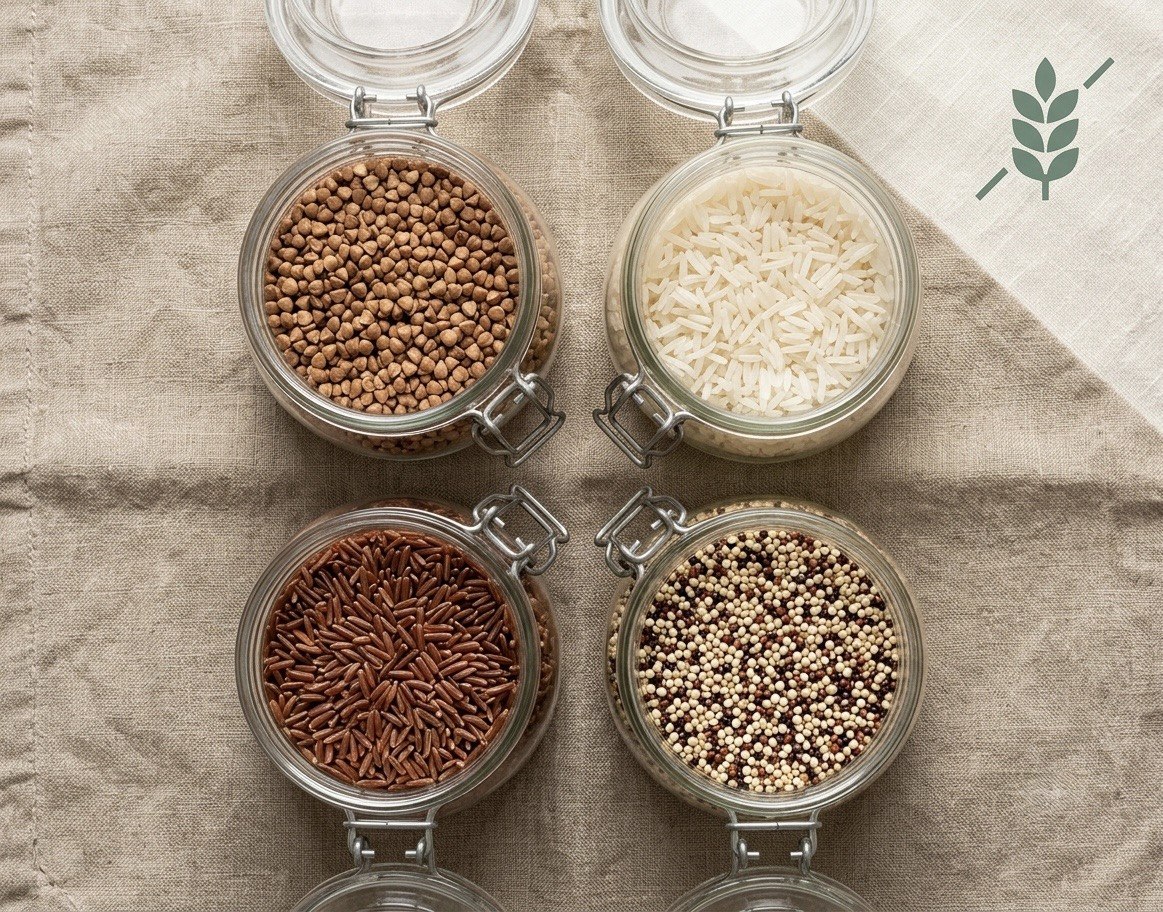
Safe, no second thought
Nothing here contains gluten in any form — no cross-contamination asterisk attached, no fine print required:
The one exception hiding inside this list: seasoned rice mixes. "Rice" is safe; "rice mix" is a different product with its own ingredient panel.
Check the label before you check out
These two are naturally gluten-free — the plant itself has never contained gluten. What gets them isn't the grain, it's the equipment:
"The grain never touched wheat. The silo did."
why "naturally gluten-free" isn't a claim
Oats and millet are routinely grown, harvested, and milled on the same equipment as wheat, rye, and barley — the contamination happens before anyone has printed a label. Only a product explicitly marked gluten-free has been through supply-chain controls that keep those grains apart. Plain "oats" with nothing else on the front should be treated as unverified, not assumed safe by botany alone.
Not even up for debate — it's wheat
No ambiguity to check here. These aren't alternative grains with a gluten problem; they're wheat, or close enough to it that the question doesn't apply:
Three lists, three different reasons to trust or distrust a name on a package — and only one of them ("check the label") actually requires you to do anything at the shelf.
Sample product
Scan Result
This one was labeled plain "oats" — no gluten-free claim on the front. Knowbite sorts it for you before it's in the cart, not after.
Scan Now — it's free